This is the second post in my 3D-printing series. In the first article, I covered how I got into 3D printing and how my printers evolved over time. In this one, I wanted to focus on what the hobby actually taught me. If you want the broader project archive with the actual prints, fixes, and experiments, that lives in the third article.
What 3D Printing Actually Turned Out to Be for Me
What surprised me most about 3D printing is that the novelty wore off pretty quickly, but the usefulness did not. The part that stuck was the ability to design and print my way out of little annoyances, broken parts, awkward gaps, weird fitment issues, and all the other problems that are either hard to buy for or not worth buying a whole commercial solution for. That is the thread running through almost everything I have enjoyed most about this hobby. I really did start out wanting to keep my printing limited to things I actually needed, and over time I realized I had also become the kind of person who was always tempted to see whether I could fix something with a 3D print.12
That is also why I still think about this hobby less in terms of printer specs and more in terms of how often it has helped me solve real problems. Years into it, I was still saying that I was constantly amazed at how many situations I had solved just by having a 3D printer sitting nearby. That still feels like the clearest summary of why this hobby lasted for me.3
A lot of those lessons got pressure-tested over time in the PrinterKnowledge community, where I could bounce ideas off other people, compare what was working, and keep refining how I thought about materials, workflow, and practical prints.
This article is deliberately curated rather than exhaustive. The broader project catalog lives in the third article, so this one can stay focused on the bigger lessons, the experiences that shaped how I print, and the projects that best illustrate those points. If you want the full chronology of how I got from the Monoprice to where I am now, that is in the first article.
The First Layer Really Does Decide Everything
One of the earliest things I learned was that bed adhesion is not a minor detail. It really is one of the most critical and frequently difficult parts of successful 3D printing. Early on, my preference was heavily shaped by impatience. I was mostly printing PLA, I did not want to wait around for a heated bed, and I cared a lot more about repeatable results than about doing things the fashionable way. For a long time that meant blue painter’s tape on a cold bed, a slightly squished first layer, and a brim when I needed extra insurance on tall or narrow prints.4
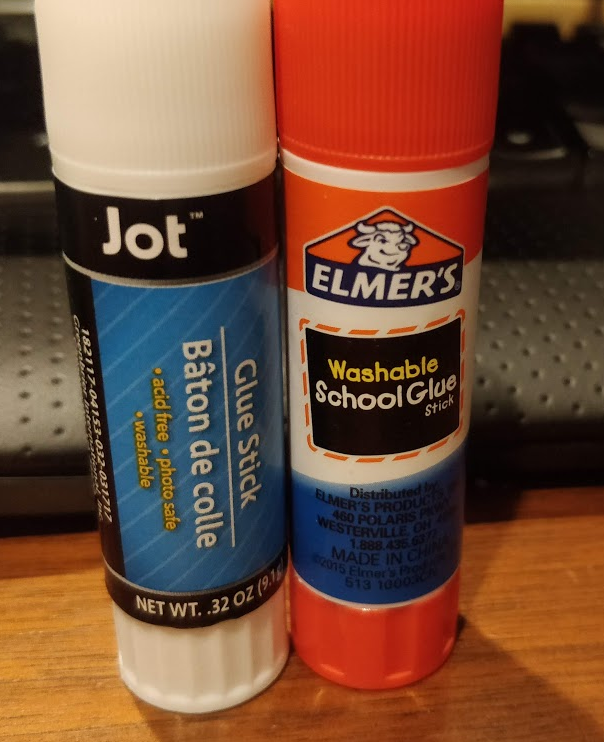
Eventually I gave glue-on-glass another real try and finally understood why people kept recommending it. The key detail turned out not to be just glue in the abstract, but the actual glue. After comparing Elmer’s purple glue against cheap dollar-store glue on the same bed, it became obvious that the Elmer’s worked dramatically better. Once I switched over fully, the combination of glue on a Home Depot mirror gave me an almost absurdly reliable first layer on a cold bed. I could get a lot of prints without constantly refreshing the surface, and removing parts was easier than it had been with tape.56
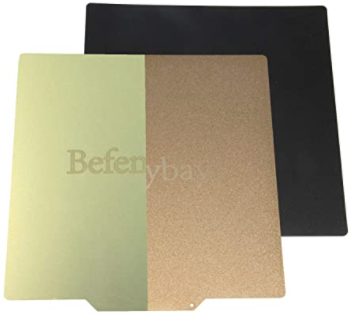
By 2022, I could summarize the entire adhesion progression pretty cleanly: blue painter’s tape on bare metal, then glue stick on cold glass for years, then finally PEI on spring steel. That PEI move felt like a mature version of everything I had been chasing before. The textured side liked more heat and gave the nice self-release effect once it cooled. The smooth side was more forgiving for smaller prints. It did not make experimentation disappear, but it did make the whole process feel more stable and less improvised. The lesson was not that there is one perfect build surface. It was that every surface is a tradeoff, and the right answer is the one that works reliably for the way you actually print.78
Filament Taught Me That Storage Matters
I do not burn through filament nearly as fast as some people do, which meant I ran into moisture and brittleness issues fairly early. That turned into one of the more practical parts of my 3D-printing education. First I hacked together a filament-drying setup using a 20-plus-year-old dehydrator, some cardboard, and clear plastic from a two-liter soda bottle. Then I made a temporary bag-style dry box with a Bowden tube passing through sealed ports. After that I built a proper box with bearings, dowels, desiccant, and hygrometers so I could keep full spools dry while still feeding filament out of the enclosure.91011
What I learned from all of that is that storage is not just about low humidity in theory. It is about the whole path from spool to extruder. At one point I solved one problem and created another because I had too much Bowden tube and too much drag in the feed path. On top of that, older filament can still become brittle, especially when it is tighter on the inner part of the roll and has to bend more sharply as it feeds. So the lesson was not just keep filament dry. It was keep it dry, keep the path simple, and do not forget that age and winding tension can still bite you.121314

Materials, Safety, and Risk Tolerance
Another thing that became clearer over time is that I do not think about 3D-printing safety in absolutes. I never jumped into ABS early because I had no enclosure and my printer was sitting in a tiny office where I spent most of the day. That was enough to make me cautious before I even got into the chemistry or emissions side of the discussion. More than once I found myself coming back to the same basic idea: people make risk decisions in all kinds of areas of life, but the important thing is to make those decisions based on decent information rather than vague assumptions.151617
That same mindset showed up in smaller decisions too. Years later, when I posted a sugar-and-salt measured dispenser remix for a mason jar lid, I did not pretend PLA was universally food-safe in every possible use. I just looked at the actual use case: dry materials, relatively inhospitable environment for bacteria growth, and a level of risk that I personally felt comfortable taking. That is more or less how I think about a lot of 3D-printing decisions now. Not zero-risk fantasy, not panic, just tradeoffs and context.1819
Learning to Design Changed the Value of the Hobby
At the very beginning, I was still trying to understand the whole chain of creation. First create the part, then slice it, then print it. Tinkercad was the perfect gateway drug for that stage. It was free, web-based, easy to learn, and approachable enough that I immediately liked it. I could tell right away that it was opening the door to creating useful things without forcing me into a deep engineering-software rabbit hole on day one.2021
It also did not take long to run into its limits. I remember being frustrated that I could not even measure the distance between two points in a model. That was the beginning of the long push toward more capable CAD tools. The funny thing is that I put that off for years because I was honestly afraid of it. I thought parametric CAD would be over my head. What finally got me moving was following along with a handful of build-with-me videos and realizing I did not need to understand everything at once. Once I got over that mental wall, I wished I had started sooner.222324
At the same time, one of the most useful lessons I learned is that the best CAD tool depends on the job. Onshape became much more powerful for exact-fit parts and more sophisticated geometry, but I still found myself running back to Tinkercad whenever I needed something quick and dirty or whenever the job was simple enough that speed mattered more than elegance. That is still how I think about design software now. The goal is not to prove loyalty to a platform. The goal is to make the part and solve the problem.252627
TPU, PEI, and the Difference Between a Successful Print and a Lasting Part
I built TPU up in my head for a while before I actually tried it. I bought a roll of Overture TPU, assumed I would probably struggle on a stock Ender 3 V2 with a Bowden setup, and basically went into the experiment expecting frustration. That turned out to be a good reminder that sometimes the internet makes a process sound more impossible than it really is, especially if the part you are printing is simple and the use case is well matched to the material.28
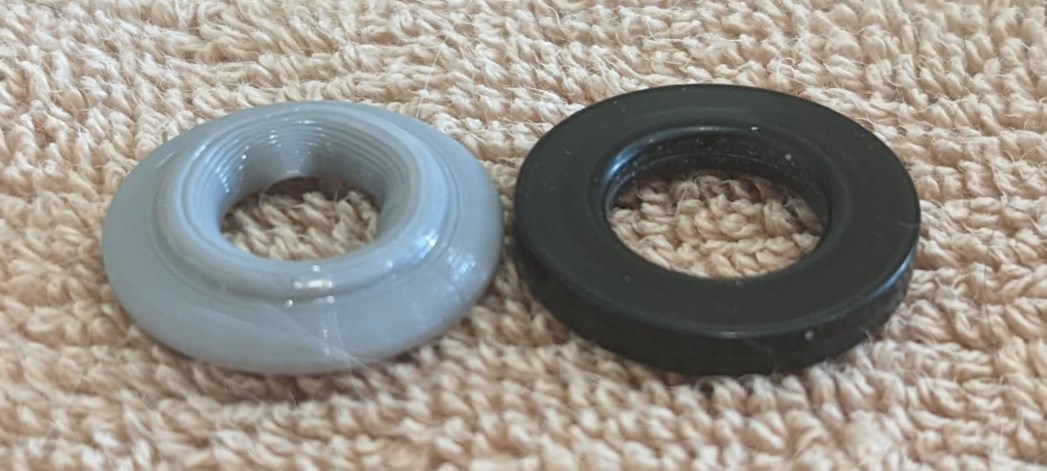
The project that finally pushed me into TPU was a leaking SodaStream. The original gasket had gone missing, so I measured what I needed with calipers, modeled a replacement O-ring in Tinkercad, mocked it up in PLA first, and then slowed everything way down for the TPU print. I printed on a PEI sheet with a lot of glue stick, kept the speeds at 20 mm/s, and the result was almost suspiciously easy. The final gasket worked perfectly in the machine and felt like one of those moments where the right material really did open up a new category of useful fix.2930

The more useful lesson came later. The gasket worked, but when I eventually found the original and compared them, the TPU version had compressed and lost a lot of its bounceback. That is a perfect example of the difference between a successful print and a durable long-term part. Getting something to print is one milestone. Understanding how it behaves under load, compression, heat, time, and repeated use is a different one.31
The Prints That Best Show Why I Love 3D Printing
These are some of the projects that best explain why the hobby stuck for me. I cover them here because they illustrate bigger lessons, but I put the more complete project-by-project archive in the third article.
The Toilet Seat / Bidet Spacer
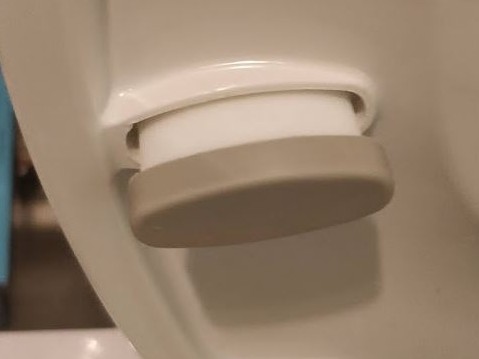
This is still one of my favorite examples of why 3D printing is worth the trouble. I had a cheap bidet attachment on a toilet where the seat no longer rested correctly against the bowl. Instead of living with the gap or trying to find some weird off-the-shelf spacer, I looked at the existing bumper, scanned it, cleaned up the image in Photoshop, imported it into Tinkercad, and started building the geometry I needed around it. I went through multiple iterations, kept refining the shape, and ended up with a part that solved the exact problem cleanly. It was one of the most satisfying projects I did because it combined scanning, CAD, fitment, iteration, and real daily usefulness.323334
The Wall Plate and the Pegboard Wall
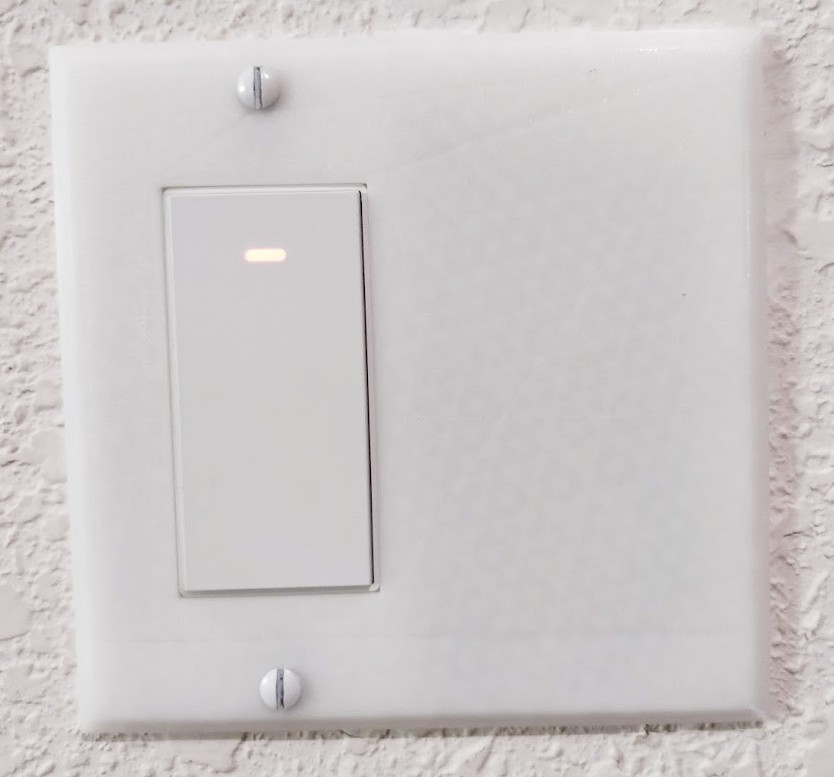
The two-gang wall plate was a smaller project, but it captures a lot of what I like about functional printing. I needed a very specific switch cover because I was combining two controls into one smarter setup. I could have bought something close enough, but instead I customized a model, printed it, and ended up with exactly what I needed. The finished part cost about twenty-three cents worth of plastic. Even better, I iterated once more, thickened things up, slowed the print down, and got a version that looked noticeably better when installed.3536
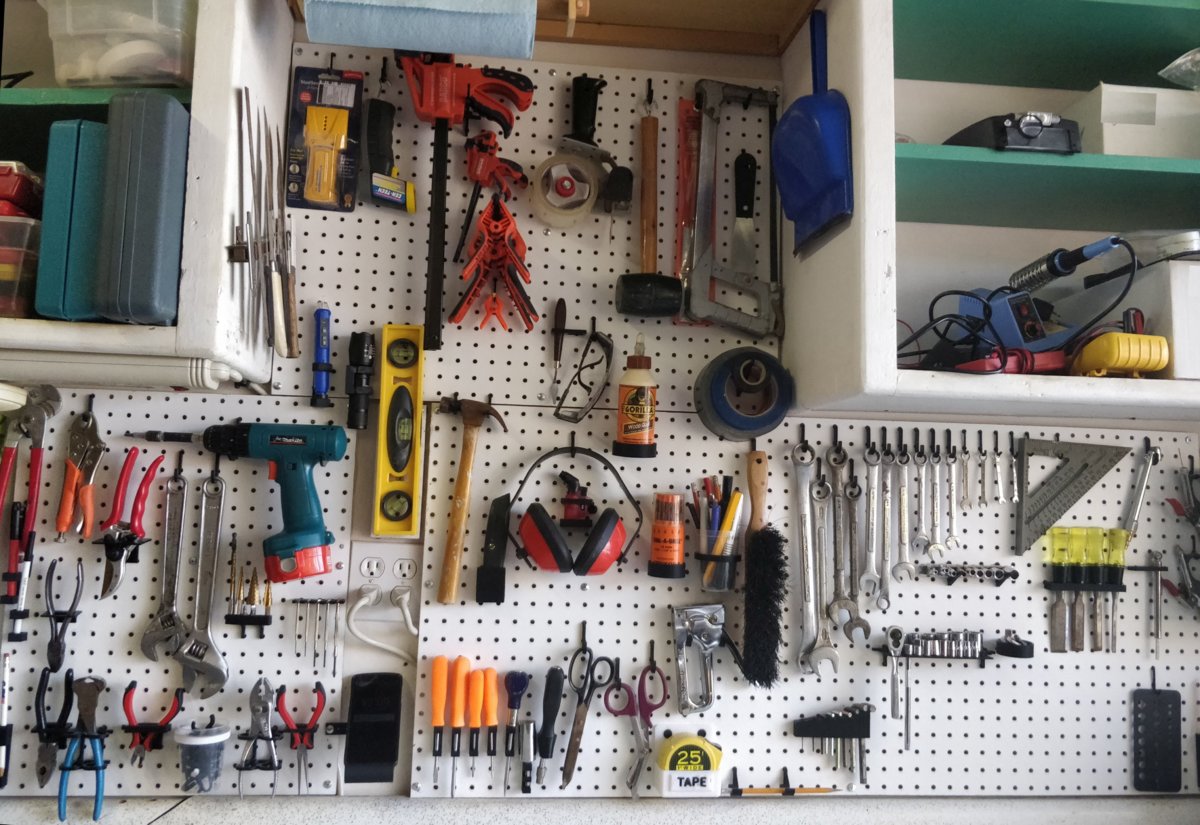
The pegboard project took that same idea and scaled it way up. I spent days designing and printing custom holders for drills, sockets, Allen wrenches, a flashlight, a tape measure, and a bunch of other tools. It probably took vastly longer than just buying generic pegboard hooks, but the result fit my exact tools and my exact space. The unexpected bonus was that it helped me declutter. Once I had specific places for the things I actually used, it became easier to get rid of duplicate junk that had been hanging around in drawers for years.37
The Tesla Tray, the Bike Adapter, and the Kind of Parts Stores Do Not Sell
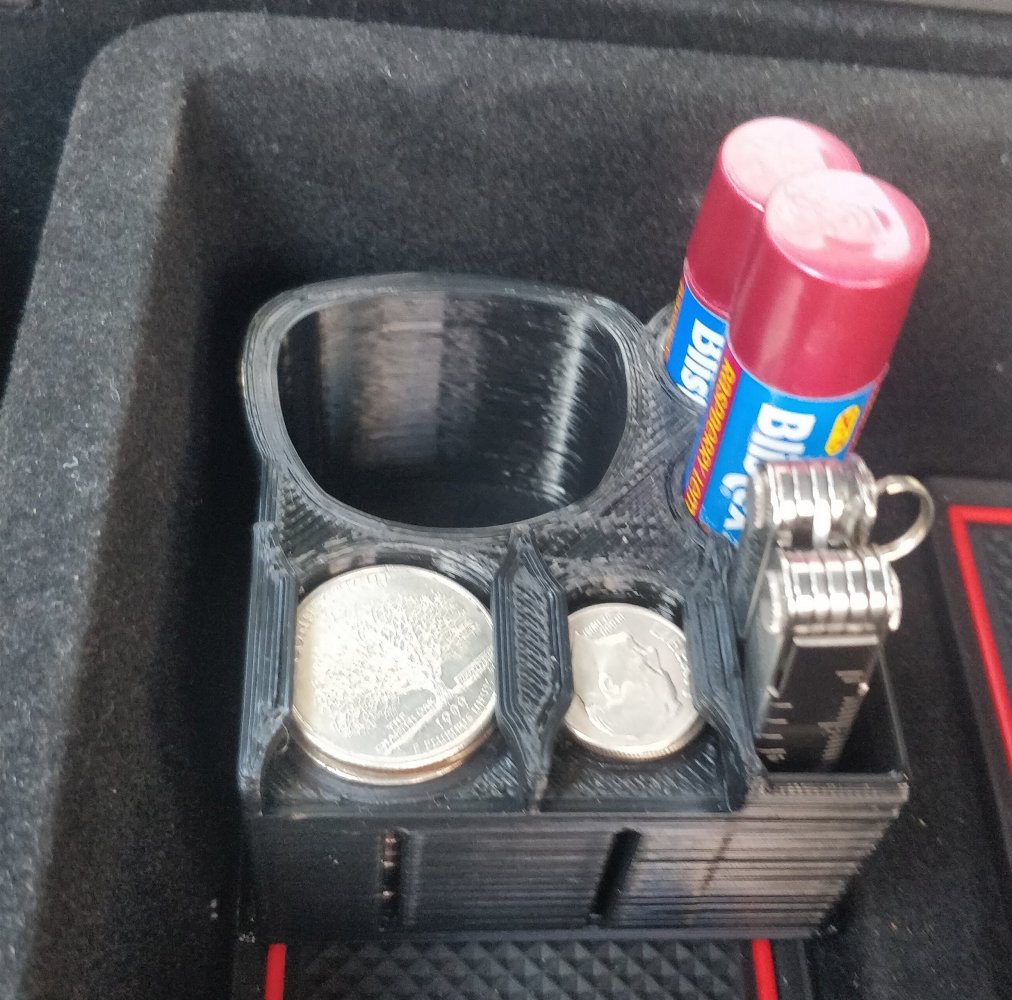
The Tesla center-console tray project is another good example of the kind of custom-fit problem that 3D printing handles beautifully. I wanted a holder for the charge adapter, a coin dispenser, a place for ChapStick, and a spot for a small tool, all in one part shaped specifically to the car. To get the adapter profile, I scanned it on my flatbed scanner, cleaned it up in Photoshop, imported it as an SVG into Tinkercad, and built the whole part around it. That project really captures the combination of digital design, physical fitment, and practical usefulness that keeps pulling me back into this hobby.38
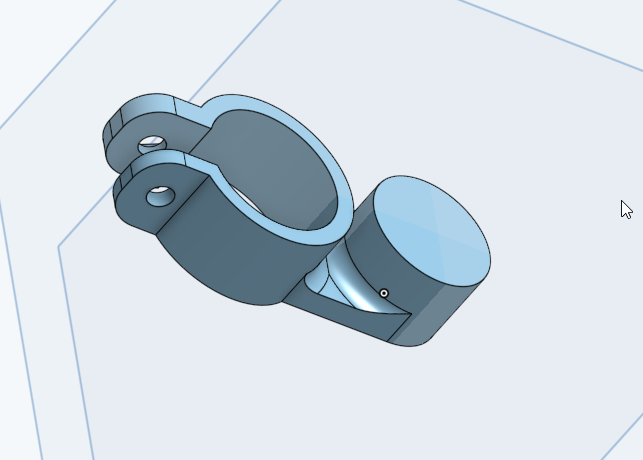
Years later, I was still doing the same kind of thing with better tools. When I changed my bike handlebars and ran out of room for the gear I wanted to mount, I opened Onshape and designed a custom adapter for the thicker bar section. Around the same period I also posted a mason-jar dispenser remix for measured sugar, salt, and neti-pot solution. Different parts, different tools, same underlying pattern: if I need something specific and it does not really exist in the form I want, there is a decent chance I will just make it.3940
The Prints I Remember Most Fondly
The Chicken Trophy
If I had to pick one project that best combines creativity, design, problem-solving, and sheer fun, the chicken trophy is high on the list. I wanted something truly special for a BackYardChickens member who had hit 100,000 posts, and buying a generic trophy felt weak. So I built one. I merged and modified different source models, used a scanned chicken silhouette, added text, created a faceplate, and then started getting clever with the base. Instead of just accepting a lightweight print, I used Cura’s gradual infill steps to create cavities and literally poured copper BBs into the print while it was running so the base would feel heavier and more substantial.41
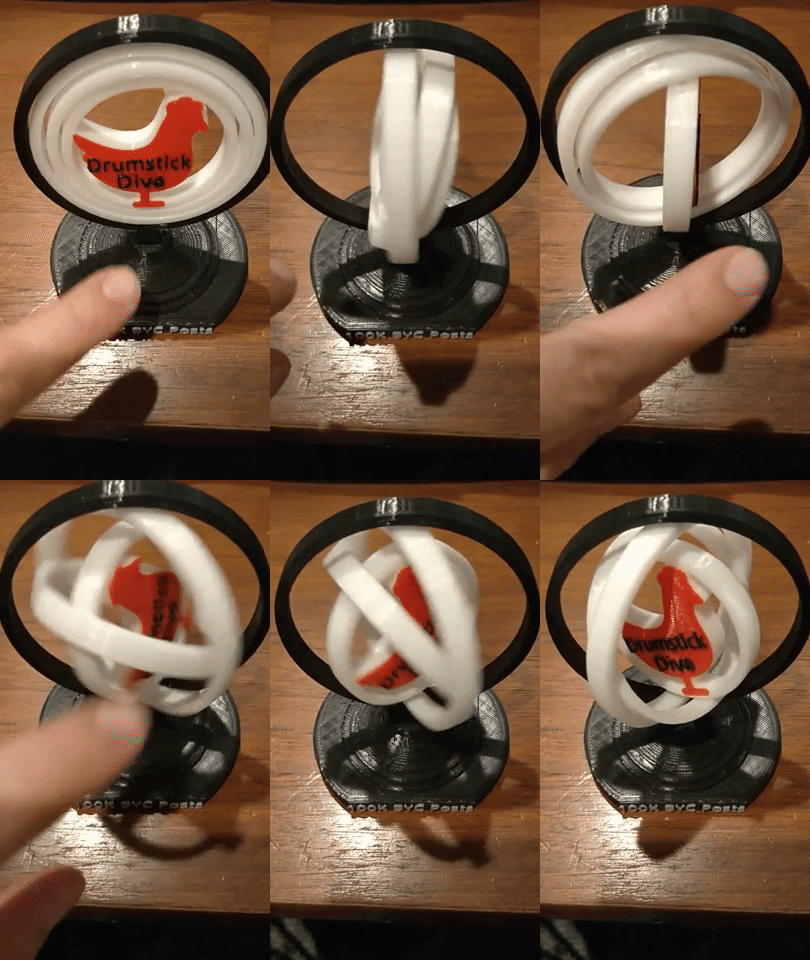
What I love about that project is that it did not stay a one-off. I made later versions, improved the weighting method by designing an open cavity for tire weights, and kept refining the process. That is another pattern I have come to appreciate in 3D printing: sometimes the first version proves the idea, and the second or third version is where the design really settles in.4243
The Cat Toys
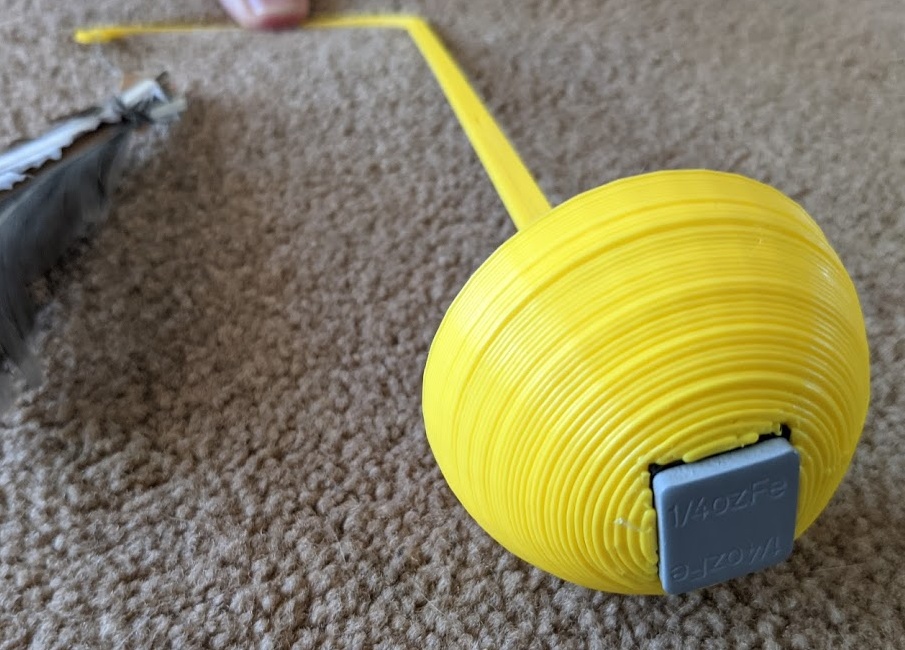
Not every memorable print has to be a serious utility part. Some of the most enjoyable ones are just fun in a different way. The cat toys fit that category for me. I started with a printed ball toy that had a break-away ball inside so it would make noise while rolling around, and then I moved almost immediately into designing a wobble toy from scratch with room for weights in the base, string, and feathers. That mix of downloaded model, remix mindset, and scratch-built design is a pretty good picture of how I naturally use 3D printing. Sometimes you start from someone else’s idea. Sometimes you jump into Tinkercad and make the exact version you want.444546
Workflow Matters More Than Internet Consensus
One of the more mature lessons from the later years is that workflow matters just as much as print quality. I have thought about switching from Cura to OrcaSlicer more than once. Angus likes Orca, and I respect him. There are also cases where a model will behave badly in Cura, then print fine in another slicer. I am not blind to that. But the reason I stayed with Cura for so long had nothing to do with brand loyalty. It was because Cura could print directly to my Ender-3 V3 SE over USB, and since most of my prints are quick and small, that convenience mattered more than theoretical feature advantages elsewhere.4748
The bigger lesson there is that I have become a lot less interested in adopting tools just because they are newer or more hyped. If a new slicer fixes a problem, great. If a new tool removes friction from my actual day-to-day workflow, even better. But if changing tools adds hassle without meaningfully improving the way I work, then it is probably not an upgrade for me yet. That is why my own conditions for fully switching stayed so simple: either the software needs to support the workflow I already value, or I need a printer whose connectivity changes the equation.49
What I’d Tell Someone Getting Into 3D Printing Now
- Start with something you actually need. The fastest way to understand the value of 3D printing is to solve a real annoyance in your own house, car, office, or workshop.5051
- Get the first layer under control early. Nothing makes the hobby more frustrating than fighting adhesion every single time you print.5253
- Learn some CAD sooner than feels comfortable. It does not have to be perfect, and it does not have to start with the most intimidating tool.5455
- Keep filament dry and keep the feed path simple. Storage problems and feed problems often show up together.5657
- Use the workflow you will actually stick with. Convenience is not a shallow concern. It is part of what determines whether you enjoy using the tool.5859
- Think in terms of informed tradeoffs, not rigid rules. Materials, safety, food contact, and printer placement all live in that category.6061
At this point, that is probably the cleanest summary of what 3D printing has been for me. It is not just a machine, not just a hobby, and definitely not just a collection of Benchies and upgrades. It is a practical tool that rewards curiosity, iteration, and a willingness to make your own exact solution when the off-the-shelf answer is either wrong, annoying, or nonexistent. That is why it has remained one of my favorite hobbies for so long.6263
The first article covered how I got here. This one covered what the hobby actually taught me. If you want the cleaner project archive with the actual prints, practical fixes, and favorite builds, continue on to the third article.