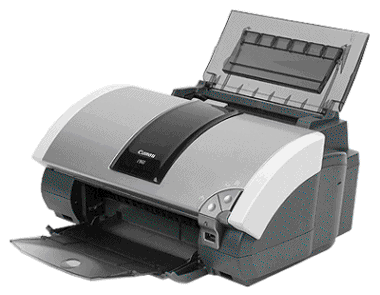
A few weeks ago I received the following email:
“I’ve written a procedure explaining how to remove a Canon i960 printer from its cover and base and how to prepare it to be operational while out of its case. It’s a 4 page PDF – 1 graphic, 3000 words, 36 paragraphs. Too big for a comment. If interested I’ll email it to you as an attachment.”
Well, I gladly replied that I’d love to see it. Below is the contents of the PDF and hope many find it useful. Thanks David for all your work putting this together!
“I find the Canon i960 printer manual lacking in practical information about inspections, tests and cleaning. This procedure explains how to remove the top cover and base and how to prepare the printer to be operational while out of its case.
Basic tools for this job are a medium size phillips type screwdriver with a 5-6 inch magnetized blade. Most hardware stores sell a simple magnetizing device for this purpose. Two straight blade screwdrivers – medium and small. A regular screwdriver with a sharp tip to pry apart connectors. Letter opener. Flash light. Container for small screws. Newspapers. Paper towels.
To remove the top cover: Turn the printer power on. Let it stabilize. Open the lid. The print head will move to the center. Pull the AC plug AT THE PRINTER. Pull out the USB cable. Remove any paper.
Remove the panel that holds the power/resume buttons – 2 screws. Unplug the cable from the button panel. Pry the connection partially apart, then grasp the conductors and pull with a rocking motion. Set the button panel aside. At the rear of the printer remove the inspection plate. Set it aside.
Look for 5 horizontal slots midway around the perimeter of the case. Use a flat blade like a letter opener to depress the internal plastic release tabs while pulling up on the open top cover. After the top cover is snapped loose, close the lid and rear paper rest. Grasp the top cover by each side and lift it from the base in a rocking motion. Set it aside. A cover over the USB connectors lifts out after removing the top cover. Set it aside.
A push-button switch at the top-center of the logic board senses the top cover lid opened or closed. Its normal state (closed lid) is NOT depressed.
If removal of the printer frame from the base is NOT required, reconnect the button panel and cable connection and temporarily install the panel on the base using the bottom screw. With the cover removed paper is not supported. Make a paper support. Cut a 7×9 inch panel from a corrugated cardboard box and insert it about an inch into the gap behind the rear paper guide. Now normal operations are possible as though the cover was in place.
Before removing the printer frame from the base, preliminary measures should be taken: Arrange a work station
-garage bench, utility table, kitchen table – preferably well lit and at a comfortable height. Prepare two wooden blocks to elevate the printer above the work surface. Lego blocks might work. Have newspapers and paper towels on hand.
For a test lash-up, cables from the power supply module, the button panel and a base test plug must be re- configured. It’s not necessary to disconnect them from the logic board or disturb the wiring runs.
Remove the power supply module and the power cable from beneath the base: Turn the printer around so the rear of the printer overhangs the edge of the work bench 3 inches. The power supply module resides in a recess beneath the rear of the base. At the end of the module towards the AC connector is a 3/4 inch wide plastic tab. Pry it away from the end of the module while grasping it near the AC connector. The module will drop out. At the other end of the module is a 9 wire plug. Pry/pull it out. Set the power supply module aside. Pull the power cable and plug back up to the top side of the base.
A cable of 8 red wires terminates on an open plug at the right rear corner beneath the printer base. It serves no purpose for this operation but must be dealt with because it’s fastened to the base. From above bend some of the red wires facing the rear to mark that side. To disconnect it from the base compress the locking tabs of the plug from below the base and pull it out from above. I used a medium size regular screwdriver and pried against a tab from below on one side while pulling up at a slight angle on the wires. Then I moved the screwdriver to the other side and did the same thing. The plug came out easily despite the tight spot. Leave the plug dangling. Turn the printer around.
At the front of the printer above the paper discharge chute is a 12 inch plastic bar. Removing this bar allows more maneuvering room to install or remove the printer frame from the base, but it’s not necessary to remove it.
It’s held in place by vertical latch tabs at both ends. Grasp the left end of the bar and push firmly to the left and upwards. On the right side on the end near the black purge pump look for a 1/2” tab that extends downward. The tab must be pried towards the purge pump while lifting upwards on the bar. Set it aside.
The printer frame is held to the base by 2 screws located in the rear and 2 tabs (not visible) in the front. On the right rear corner a screw is located directly downward in line with the slot used to depress an internal plastic tab. Look down over the edge of the base with a flash light and use a magnetized phillips screwdriver to remove the screw. On the left rear corner the screw is located in line with the white fiber gear. It’s visible and easy to remove. Ignore the other screw nearby.
If the button panel was temporarily installed earlier remove it now from the base and unplug the cable. Look for the U-shaped metal bracket at the right side near the purge pump motor. For future reference, make a mark on the vinyl covered button cable at the center of the purge pump motor. Remove the bracket – 2 screws. Arrange the button cable so that it is free from snagging when the print frame is lifted from the base.
Grasp the printer by the metal tabs on either side of the center frame and lift upwards favoring the left side. The front holding tabs are cleared by pushing the frame slightly backwards after the rear clears the base a fraction of an inch. Jiggling the printer frame may be necessary. Avoid handling the frame at any other points. It’s easy to damage fragile parts. Once clear of the front tabs the printer should lift free from the base but watch carefully for any overlooked connection or obstruction. Set it down.
On the printer base look for any foreign objects (screws, clips, springs etc.) and save them. Remove the white plastic bar with teeth from the printer base and set it aside. The printer base and waste ink pads will be cleaned later.
On the printer frame there may be dust/debris in areas that are now accessible. If you have access to compressed air, this is the time to blow it out. Leave the print head away from the purge area. Don’t blast ink from the purge area onto other parts.
Prepare the printer to operate outside of its cover and base: Put down newspapers. Elevate the printer base on blocks. Make sure a folded paper towel is below the black purge pump near the right front corner.
Plug the button cable into the button panel and place it in a convenient location. Plug the 9 wire power supply
cable into the loose power supply module. Plug in the USB cable from the computer. Insert the 7×9 cardboard panel into the gap behind the rear paper guide. Load some paper. Remove the ink cartridges and visually check for ink levels. Reinsert them and move the print head back and forth a few inches by hand. It should move smoothly. Confirm that the print head locking lever is down. Plug the AC cord into the loose power supply module.
Turn the power on. Look for the green light. There will probably be print head movement and purge activity. After the printer stabilizes, depress and hold the open lid button on top of the logic board. The print head should move to the center. Release the button. It should return to the parked position over the purge unit at the right side. There might be ink on the folded paper towel.
Turn the COMPUTER on. After boot-up go to Start/Settings/Printer. Right-click on the i960 printer icon. Go to Properties/Print Test Page. The printer should print the test page. Click on the Maintenance tab. Do a nozzle check.
At this juncture there are many things to check for, depending on conditions and symptoms. It’s beyond the scope of this procedure to list them but if cleaning, lubrication and repairs are to be made, this is the time. If any clips, screws, etc. were found in the bottom of the base, this is the opportunity to determine where they MIGHT belong.
Clean the waste ink pads: In the base are two pads on top of each other running 11 inches along the length of the base. Two small pads are on top of each other near the purge pump area. There’s also a pad at the far left of the base that’s probably not stained. Remove it too. Set it aside. The others are very messy. Take the base to a laundry type utility sink or a bath tub. Put on rubber gloves and remove the pads. Don’t do this on the driveway unless you can live with the stains.
Place them under a running faucet or direct a warm water stream from a hose to flush them out. Using your gloved hands, press the water out, flip them over and press the other side. Repeat this until the ink no longer blackens the water pressed from the pads. Be careful not to damage the small ears on the big pads. The stains can not be removed but the bulk of the ink will be flushed out. Leave them soaked with water so they dry out to maximum thickness. Place them on 4-6 layers of paper towels, preferably outside in the sun. Flip them and change the towels every few hours. It might take 2 days for them to dry.
Flush the base under a stream of warm water to remove the ink. Clean the printer top cover with soap and water. Use a spray bottle of bleach type cleaner to remove stains from the sink or tub.
To re-assemble the printer gather all the parts that were set aside in one location. Keeping an eye on them will guide you what to do next and in what order. Start with the base. After the waste ink pads are dry, install them. Start with the small ones. The bottom pad may be of different material than the top one. Install the single pad previously set aside. Install the big pads. There’s a slight difference between the bottom and top pads. Install the white plastic bar with teeth on the base. It fits only one way.
Disconnect the loose power supply module from the power supply cable and the AC cord. Disconnect the button panel from the button cable. Remove the paper and 7×9 cardboard panel from the rear paper guide.
With the base and printer prepared, lower the printer onto the base: First, position the button cable so that the reference mark is near the center of the purge pump motor. To hold it from flopping, place the button cable above the metal tab that anchors one side of the U-shaped bracket. Tape is optional. Grasp the printer frame by the tabs on either side of the center frame. The rear of the printer has to go slightly back beyond the screw holes so that the 2 front tabs are engaged when the printer is then brought forward. It might require some jiggling. You can tell if the printer frame is seated properly when you can see the rear holes firmly against the bottom case and are lined up. Confirm the button cable is in the slot at the bottom rear of the case. Attempt to lift up the front of the printer frame at both corners. It should be secure under the tabs.
Install the U-shaped metal bracket on the right side – 2 screws. It has a retainer tab for the button cable which should now be positioned correctly with the center of the purge pump motor in line with the mark made earlier. Use the magnetized phillips type screwdriver and install the 2 screws that secure the rear of the printer to the base.
If not already in place, install the 12 inch plastic bar across the front of the printer above the paper exit chute. The thick side is to the left and the 1/2 inch tabs point downward. Push the bar down from the top until it snaps into place.
Turn the printer so the rear of the printer overhangs the edge of the work bench 3 inches. Install the red wire cable plug into the square hole at the right rear corner of the printer base. The bent wires face to the rear. Push the plug down from the top side of the base into the hole until the plastic tabs snap into place.
Route the power supply cable and plug down through the opening in the right rear corner of the base. Plug it into the power supply module. Snap the power supply module into the recess beneath the bottom of the base. Set the USB cover plate in place. Turn the printer around.
Install the top cover loose. Route the button cable and plug up through the opening in front of the clear mist shield. Snap the cover down starting with the left side. Insert the button cable plug into the socket of the button panel. Open the lid. Fasten the button panel – 2 screws. Close the lid. Install the rear inspection plate.
Plug in the AC cord and the USB cable to the computer. Load with paper. Turn on the computer and printer. Wait for everything to stabilize. Open the printer lid. The print head should move to the center. Check the ink cartridges. Make sure they have ink and are seated properly. Confirm that the print head locking bar is down. Close the lid. At the computer, navigate to the printer icon and print a test page. Click the maintenance tab and do a nozzle check. Print a test color bar or photo.”
A HUGE thanks to David for sending this great writeup over!
UPDATE: I’m very happy to report that one of our printer forum community members has created a fantastic article with amazing pics for the i960 Waste Ink Tank Pad Replacement!
I just wanted to say thank you for providing this information. I was looking around for a service manual on this make and model and couldn’t find anything that didn’t come with a price tag. When I found this article I had all the info I needed, so thank you very much!
I need pictures of the various parts. ˆ’m not afraid of my tools and my printer but I do not know the names of the various parts. Where would I find free manuals that have the parts labeled like my car has? I can fix lots of stuff on it. I’m sure that this has something to do with the print head although it prints bl/wh fine! The color is what’s screwed up and my husband says let’s just get a new printer. I love this one so I’m not ready to dispose of it. Besides, staying “green” and not throwing out stuff every time it needs a repair takes initiative! Thanks for any input.
While searching for directions, as to how to disassemble the Canon i960 to clean the waste ink pads, I came across your article from David. Very helpful. Since I could not find any pictures on the web to clarify the issue, I went ahead and made my own. If you would be interested in seeing the PDF file I made, let me know. It’s a 848 word, 17 page PDF with 30 graphics. At 18MB it would have to be sent as an attachment.
Bill
Hi Bill, Wondering if I could get your info to send that pdf for cleaning the waste tanks. I’d much appreicate it! Thanks.
Shelagh, you can see all of the contents from Bill’s PDF here:
http://www.nifty-stuff.com/i960-waste-ink-tank-pad-replacement.php